sustainabilityExplore also: culture
Sustainable Leadership in an Uncertain World
In a world where uncertainty is the only constant, leading a sustainable team goes beyond simply achieving results.
By Cristian Situ
The goal is to create an environment where people feel safe to express themselves, where differences are celebrated, and where resilience becomes second nature. I have come to the conclusion that successful leadership today depends on three key elements: psychological safety, adaptive thinking, and diversity.
Psychological Security: Where It All Begins
One of the most important lessons I've learned is that leadership begins with creating psychological safety. It's the foundation on which everything else rests. Without it, even the most talented teams can fall apart under pressure. The idea is simple: people need to feel secure enough to take risks and share their ideas without fear of judgment or negative consequences.
In my experience, fostering this kind of environment is more of an art than a science. It requires intention. One of the things I do regularly with my teams is something I call “How are we doing?” It’s a ritual where we get together, not just to talk about work, but to discuss whatever’s on our minds—whether personal or professional. There’s no agenda other than active listening. What starts as a casual conversation eventually turns into deeper, more honest discussions. Trust is built. And with that trust comes the courage to be vulnerable—something essential for any team that aspires to long-term success.
Psychological safety isn't something you establish and then forget about. It's an ongoing process. I've found that leaders who can consistently foster this environment not only build stronger teams, but also more resilient teams when things inevitably get tough.
Understanding Where Your Team Stands: Wheelan's 5 Stages of Group Development
Leadership is not a one-size-fits-all approach. Your strategy must evolve with the team you lead, and that’s where Susan Wheelan’s Integrated Model of Group Development (IMGD) proves invaluable. This model describes five stages that every team goes through, and understanding these stages allows you to guide your team more effectively.
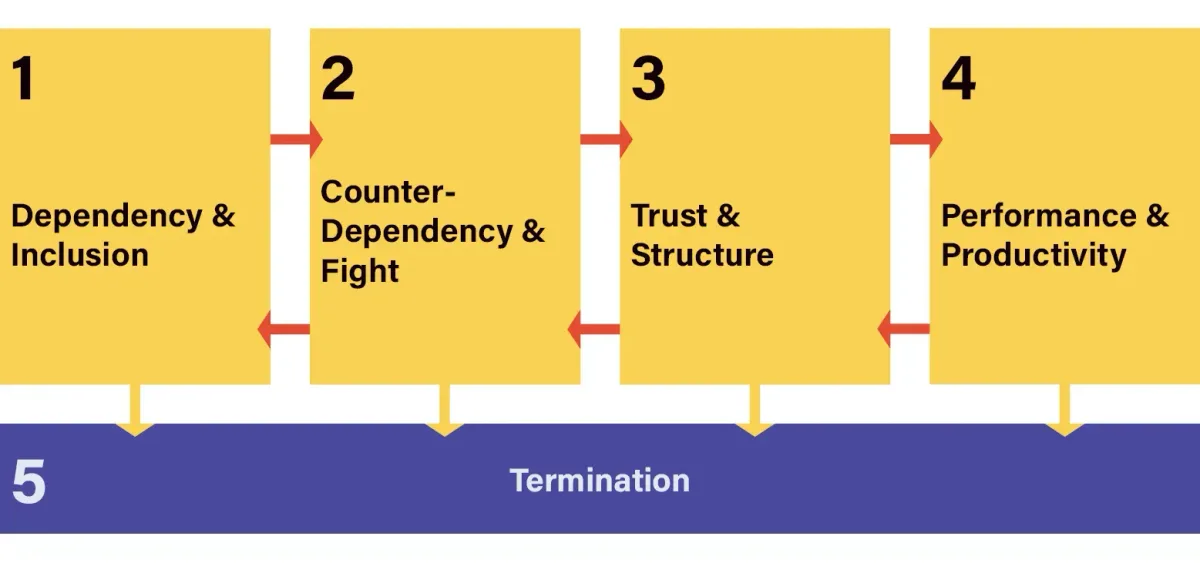
Training (Dependency and Inclusion): At this stage, team members are looking for guidance and a sense of inclusion. They’re testing the waters, figuring out how things work, and often rely heavily on the leader for direction. This is where I focus on building trust and setting clear expectations. Teams in this phase need a steady, firm hand to ensure they understand their roles and feel comfortable participating.
Storm (Co-Dependency and Conflict): This is where things get interesting. Team members begin to assert their ideas and challenge one another—and sometimes even the leader. Conflicts frequently arise as people start to express their individual viewpoints more openly. I’ve learned that this stage is critical because it’s where true teamwork begins. My role here is to facilitate these conflicts—not suppress them—ensuring that disagreements lead to productive rather than destructive outcomes.
Normalization (Confidence and Structure): As the team works through conflicts and differences, it begins to build trust and develop a clearer understanding of the structure. Roles and responsibilities become more clearly defined, and a shift toward collaboration becomes evident. In this phase, my job is to support the team in solidifying these dynamics, ensuring that we establish systems and processes that keep us aligned.
Performance (Work and Productivity): This is when teams reach their full potential. With trust firmly established and roles clearly defined, the team can focus on achieving high levels of productivity. As a leader, I can take a step back a little further in this phase, allowing the team to take ownership of its work. This is the stage where the team performs at its best: self-directed, efficient, and united.
Dissolution: Eventually, every project or team comes to an end. In this final stage, the focus is on closing the loop and reflecting on what we’ve learned. It’s essential to provide closure and celebrate the team’s achievements. I always make time for reflection during this phase, as it helps both the team and me carry valuable lessons forward to our next projects.
Recognizing where your team is in this process allows you to adapt your leadership approach, ensuring that you provide the right support at the right time. It’s tempting to rush through these stages, especially when deadlines are looming, but trust me: taking the time to give each phase the attention it deserves is what sets a team up for long-term success.
Adaptive Leadership: There Is No One Right Answer
Leadership today requires flexibility. It’s about responding to what’s happening in real time, rather than sticking to a rigid plan. One of the best pieces of advice I’ve ever received was this: sometimes, as a leader, you need to take a step back and look at the big picture. It’s like stepping off the dance floor and onto the balcony—you can’t see the patterns when you’re right in the middle of the action.
There’s a temptation in leadership to think that you always have to have the answers and be in control. But the truth is that real leadership often means letting go of that control. It’s about being adaptable and recognizing that you don’t need to have all the answers. Sometimes, the smartest thing you can do is ask questions, listen, and trust your team to find solutions.
In moments when I’ve felt stuck, taking a step back and letting the team take the lead has been key to moving forward. Adaptive leadership isn’t about being reactive; it’s about being responsive. It’s about having the awareness to read the room and adjust course when necessary. In a constantly changing world, leaders who can remain flexible will always have the advantage.
The Power of Diversity
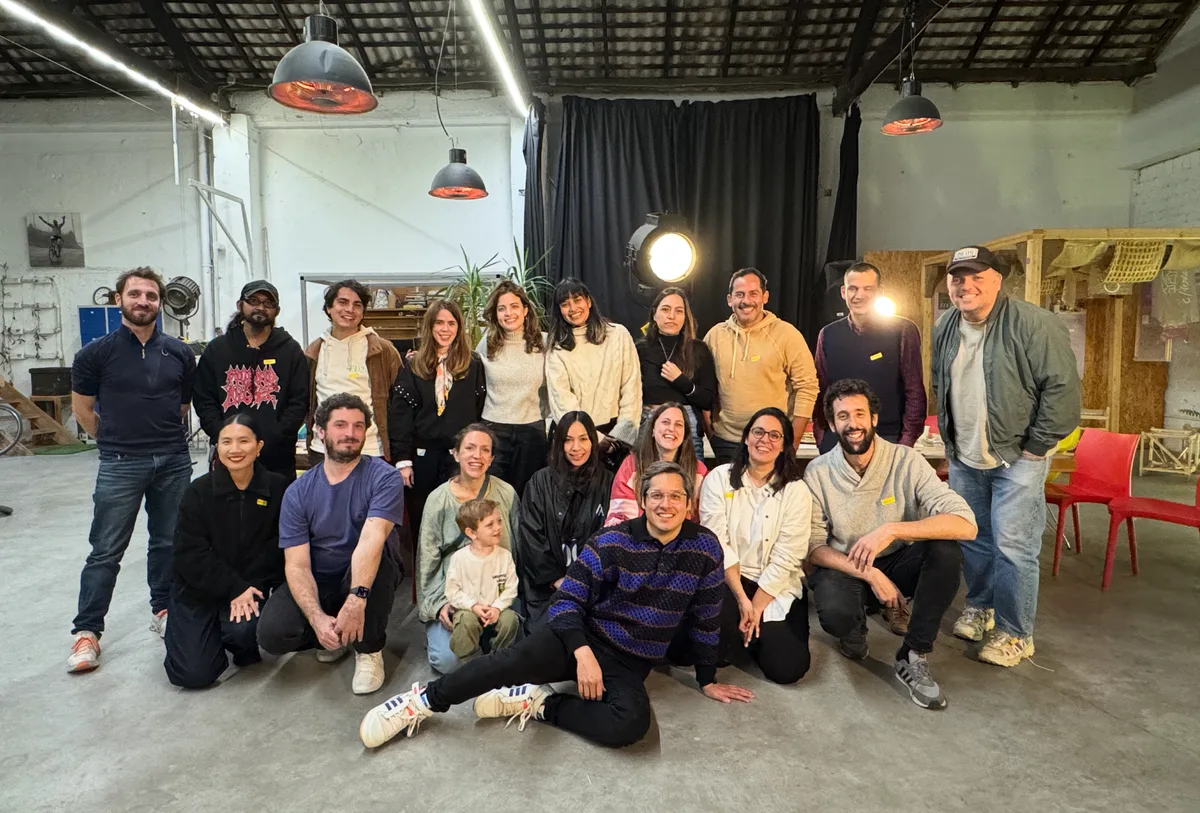
If there’s one thing I’ve become increasingly convinced of, it’s this: diversity isn’t just a buzzword. It’s the lifeblood of any successful team. But I’m not just talking about superficial diversity—race, gender, or background. I’m talking about diversity of thought, experience, and perspective.
All too often, we gravitate toward people who think like us because it’s easier. It’s human nature to want to be understood without having to explain yourself. But the best ideas—the most creative solutions—come from people who see the world differently. When you surround yourself with people who don’t think like you, it forces you to look at problems from angles you may not have considered.
The real challenge is that diversity isn’t always comfortable. It can create friction. People don’t always agree, and that can be frustrating. But I’ve learned that this healthy friction is where the magic happens. It pushes teams to step outside their comfort zone and think more deeply. That’s when true innovation is born.
In the teams I've led, I've found that when we actively embrace our differences instead of shying away from them, we come out stronger, more creative, and more resilient. It's not always easy, but it's always worth it.
In short...
Leadership today is about more than just getting things done. It’s about creating an environment where people feel safe, valued, and empowered to be their best selves. It’s about being flexible enough to adapt to the challenges that arise. And it’s about recognizing that diversity isn’t optional—it’s a necessity for any team that wants to thrive.
At the end of the day, sustainable teams aren’t built on skill or talent alone. They’re built on trust, adaptability, and the ability to embrace discomfort in the pursuit of growth. As leaders, it’s our job to create the conditions in which these qualities can flourish. Because when they do, there’s nothing your team can’t achieve.
Cover image courtesy of Hudson Hintze
Cristian Situ
Spain

About Cristian
Co-Executive Director and Founder of Sur Global, a nonprofit organization that promotes conscious innovation in Latin America. Master’s in Digital Management from Hyper Island. With more than 10 years of experience in innovation, digital design and project management, has worked in companies, consultancies and training. Was Education & Product Manager at Crehana and Head of Product at Colectivo23, leading educational projects with impact. Has collaborated as a consultant with UNICEF, Volvo, Peru’s Ministry of Education and Más Igualdad Perú, among others, always focused on design, technology and collaborative work to transform realities. Also Director of Communications and Publishing of UNTOLD.ink magazine.
Tags:futuresinnovation