UNTOLD.ink
Back

educationExplore also: decolonization

Linguistic Justice and the Pluriversal Turn

The question of what schools are for has never been more urgent. In an era marked by deepening social inequalities, ecological precariousness, and the persistent legacies of colonialism, educational institutions find themselves at a crossroads. They can reproduce the…
Linguistic Justice and the Pluriversal Turn
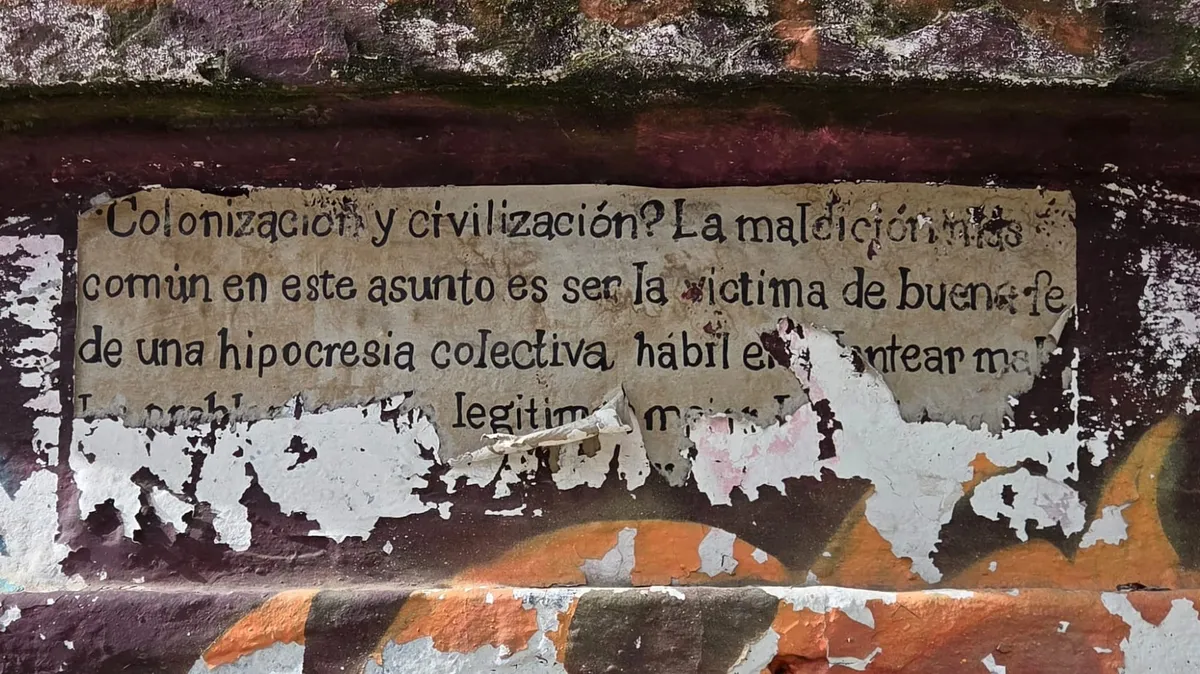
Credits: Imagen de una foto con el texto: "Colonización y civilización? La maldición más común en este asunto es ser la víctima de buena fe, de una hipocresía colectiva hábil en".
Aug 13, 2026·13 min read

Yecid Ortega

Yecid Ortega

Sobre Yecid

Yecid Ortega completed his Ph.D. in Language and Literacy at the University of Toronto (Canada). He is currently the Director of the Liminal Research & Education platform and the co-founder of the ARTEM research collective. His general research interests focus on using ethnographic-critical approaches to understand the impact of globalization, capitalism, and neoliberalism on language teaching and learning, and how this intersects with concepts of culture, race, and (de)colonization in international contexts. Additionally, his current, more specific research interest focuses on alternative collaborative research designs aimed at understanding the life experiences of migrants, refugees, and political asylum seekers in international contexts, with the goal of providing the socio-emotional and educational tools necessary for social integration.


Tags:linguistic justicepluriverse

You might also like

1:29

SURGLOBAL on The UX Rebels (Ep. 03, Season 6)

In this episode of The UX Rebels, we speak with Cristian Situ and Elsie Ralston, co-founders of Sur Global, a nonprofit organization that promotes more conscious and responsible innovation in Latin America. We discuss the origins of Sur Global, its purpose, and the educational model they’re using to train new generations of designers with a critical and locally grounded approach. We also reflect on the future of design in the region, the importance of rethinking the methods we were taught—methods that have historically been central to the world of innovation and technology—and the importance of adapting them to the contexts in which we are designing. We discussed the conference they’re organizing for October—a space where they aim to build community, learn collectively, and design from the Global South. A powerful, necessary, and urgent episode for those of us who believe that design has a social role to play in the world. And remember: we are rebels.

Newsletter

Ignite your curiosity, transform the future

Ideas and voices from the South in your inbox. Free, no spam.

We respect your privacy. Unsubscribe anytime.