artificial intelligenceExplore also: futures
Knowledge is distributed
Afrofuturism, Artificial Intelligence, and Community By Antoinette Torres Soler I was introduced to Afrofuturism through a short story by Du Bois. “The Comet,” one of his lesser-known stories, imagines a catastrophe that devastates New York and leaves, for a moment, a Black man and a white woman alive. In that moment of apocalypse, the Black man can be human. He can have a human relationship. He can ex
Afrofuturism, Artificial Intelligence, and Community
By Antoinette Torres Soler
I was introduced to Afrofuturism through a short story by Du Bois. “The Comet,” one of his lesser-known stories, imagines a catastrophe that devastates New York and leaves, for a moment, a Black man and a white woman alive. In that moment of apocalypse, the Black man can be human. He can have a human relationship. He can exist without the burden of the racial order. Du Bois wrote that story in 1920, and it already contained the central question of Afrofuturism. What would happen if the structure that degrades us were to disappear? Who would we be?
That question struck a chord with me because it touches on representation in its deepest sense. Not decorative representation, not a token of diversity, not the Black character as a peripheral figure in a white story. Representation as the possibility of existing at the center, of Black thought springing from itself and not having to justify itself to anyone else.
Then came *Black Panther*. An Africa that doesn’t exist, but that it would be so wonderful if it did. A continent where Black science sustains the world, where the contributions of African knowledge aren’t just folklore. They’re advanced, present, and powerful technology. Then came Octavia Butler with her dystopian worlds, her communities surviving the apocalypse. Butler insists that it’s not the strongest who survive. It’s those who know how to change who survive. She gave me something concrete: the idea that community is a social technology. And she also gave me a genuine sense of unease. What she imagines as possible at the end of the world has not yet been achieved in the real world.
The Community We're Missing
Social media has peddled an ideal of perfection that erodes real community. Many young people of African descent believe that this perfection exists, and that’s a burden. Real community needs generosity. It needs to understand that a project can contribute something to the world even when it doesn’t align entirely with one’s own views. It deserves to be supported.
Cancel culture undermines that logic. The idea that “if you’re not with me, you’re against me” is harmful. My position is different. If there’s something missing from an existing project, create it. Build what you feel is missing. Don’t destroy what’s already there.
The community Octavia Butler envisions in the *Parable* series is grounded in spirituality understood as ethics, in generosity, and in the recognition that each person contributes something essential. It is not a perfect community. They are imperfect people who support one another. That is what we still lack and what I believe we urgently need to build, at least in the Spanish context.
The technology I've created is a partial response to that urgent need. Partial and context-specific. Conceived from the margins, it doesn't seek to compete with the big players. It seeks to reach those whom the big players don't reach.
What human beings decided not to do
There is a common misconception in debates about artificial intelligence and racism: the belief that the problem is technical. But it isn't. Let's look at Amazon: They set up a hiring system that systematically penalized women's résumés, a bias that its own engineers detected but which, nevertheless, took years to correct. The ethical framework for taking action existed, as did the technical resources. What was missing was the will to do so. The problem was never the technology
When I built AfroféminasGPT I didn't learn to program. My background is in philosophy and communication, and that's the perspective from which I intervened in the tool. A modified artificial intelligence is exactly that: a machine that a person has decided to give different instructions to, from a different ethical framework, with a different intent.
What AfroféminasGPT does is what that story by Du Bois imagined for a fleeting moment. It places Black thought at the center. Not as a “note of color.” Not as “diversity.” As a starting point. bell hooks, Stuart Hall, Frantz Fanon, Octavia Butler, Achille Mbembe. Authors of profound and necessary ideas. The system has left them on the margins, but AfroféminasGPT places them at the center.
There’s something that really catches my attention. Sojourner Truth was an enslaved woman who, with a speech of radical simplicity—“Ain’t I a woman?”—captured the very essence of Black feminism. That question remains relevant today. General-purpose artificial intelligence reproduces that same problem of invisibility. AfroféminasGPT does the opposite. If knowledge about Black and racialized people were the norm, if it were the standard starting point, we would have a different world right now. That is the goal.
An Ecosystem of Philosophical Intervention
AfroféminasGPT paved the way. Other tools have emerged from it, each born out of a specific need.
The Afroféminas' Socratic GPT It all began the day I saw a pair of glasses capable of recording people without their consent. As the mother of a teenager—with whom I first tested the tool—I realized that younger generations might come to accept technology that lacks ethics, consent, and consequences as normal. Students are already using ChatGPT on a massive scale. The question wasn’t whether to use it. It was what kind of use we wanted to encourage.
The central idea is simple. Before creating, you have to think. Socratic GPT doesn’t provide answers. It asks questions. If a student asks it to write a paper, it asks who might be harmed, what the consequences would be, and what the student’s action entails. It’s an ethical contract prior to action—an inverted echo of Descartes’ “cogito.” I don’t think, therefore I am. I think, therefore I create.
I know it may seem naive. I accept that and stand by it. The world right now needs that naivety, which makes us more human and less calculating.
The GPT Against Hate Crimes It arose from another urgent need. At Afroféminas, we have filed many complaints about racism and hate speech on social media. The result is always the same. The system shelves them. State institutions either don’t understand what a hate crime is, or they don’t want to understand it. The result is underreporting. People stop filing complaints because they know it’s pointless.
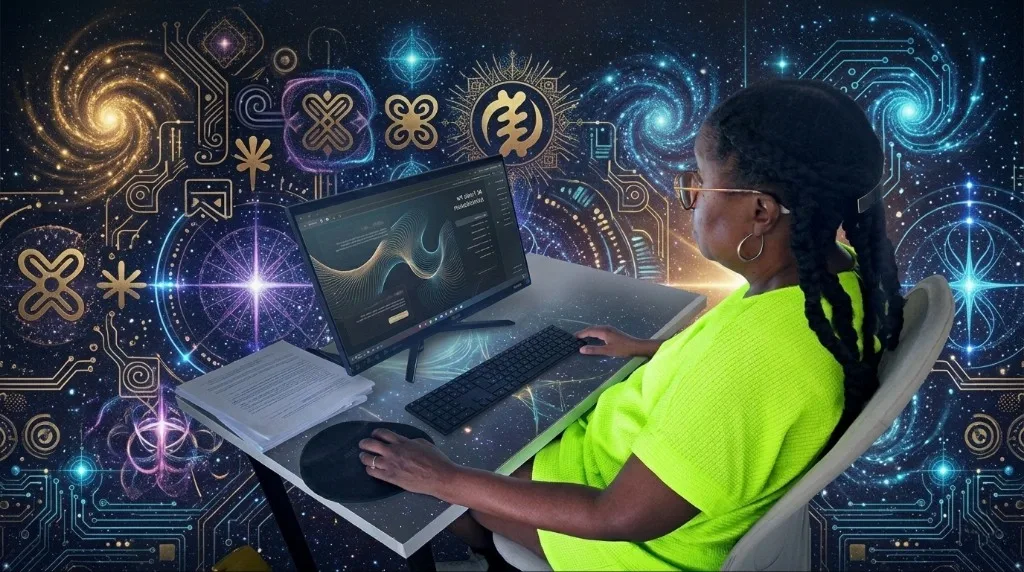
This tool does two things. It guides those who have been attacked. It tells them what they can do, who to call, and how to proceed. And it provides support. It helps you put into words what has happened to you. That moment—the moment of putting what you’ve experienced into words with empathy and without downplaying it—is something institutions rarely offer. The tool does this because there’s a person who asked it to.
Talk to Afroféminas It addresses a different need: Not everyone has a ChatGPT account. Not everyone can or wants to navigate that platform. This tool is hosted directly on the Afroféminas website. It’s more approachable, more accessible, and designed with Latin American communities that have limited access in mind. It’s another form of Afrofeminist and anti-racist activism, built from what I have and given back to those who need it.
Some people compare these tools to the resources of large tech companies. It’s true that I don’t have the same resources. I don’t have them, and I probably never will. Doing what you can with what you have and giving back to the community—that, too, is Afrofuturism.
Knowledge is distributed
Spirituality is the foundation upon which I build all of this. It is both personal and collective.
I come from the Yoruba culture. From Santería—not as it is portrayed in the media, not as it is caricatured and devalued—but as a way of being in the world. One of the ideas that has stayed with me the most from that tradition is simple yet profound: Knowledge is distributed. Knowledge is not concentrated in a single center. It is distributed and resides in places that those in power have chosen to ignore.
That idea changes how I relate to what I do. My center doesn’t have to be everyone else’s center. I can create from home, from my safe space, without being in the spotlight, without being at the center of power. And from there, I can reach many people with something valuable.
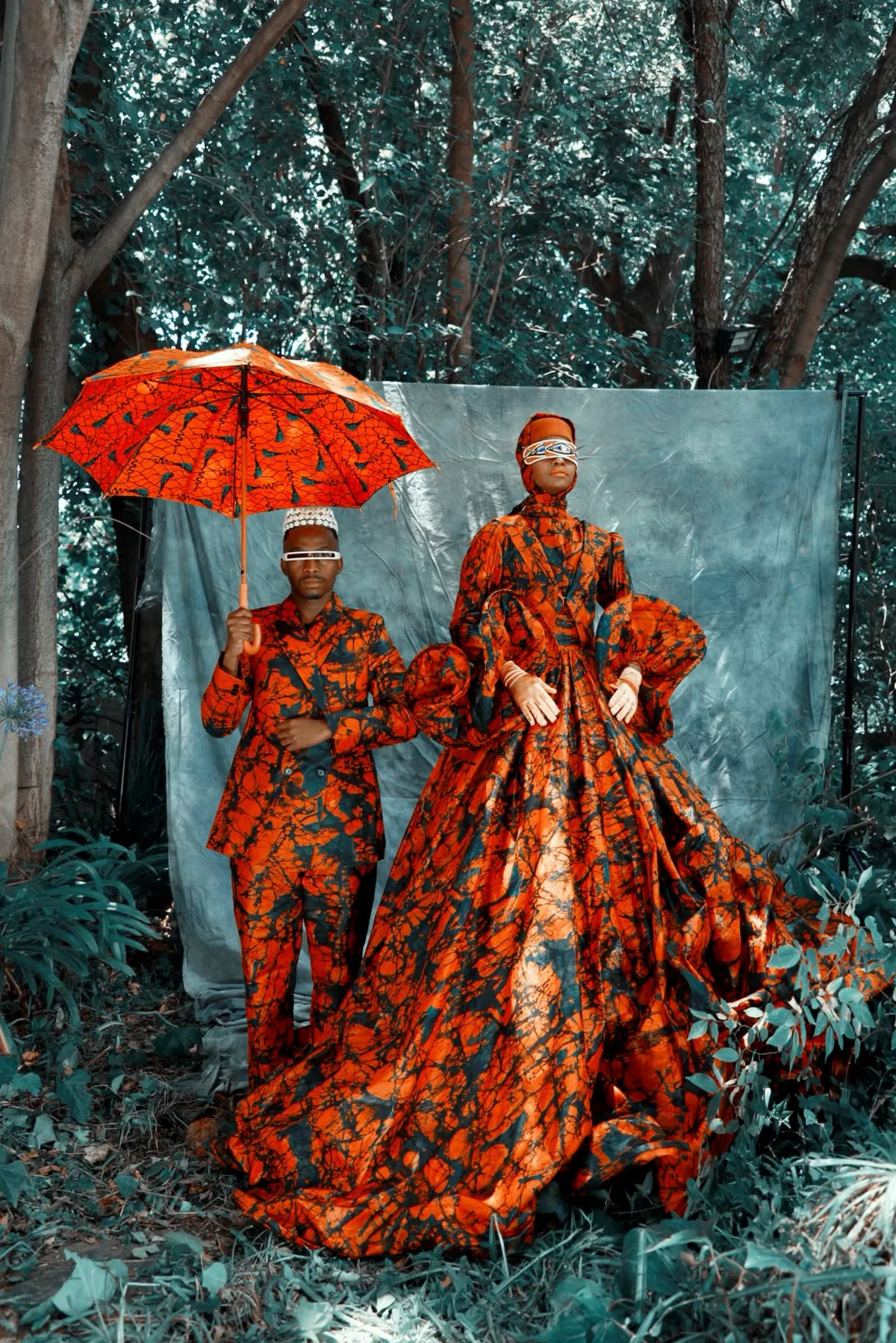
Spirituality is also closely linked to Caribbean Afrofuturism. Today, as a Cuban, my way of explaining the world—sometimes naive, sometimes unconventional—comes from my roots, from what I saw at home, and from how things were understood in my family. That spirituality is not dogma. It is a way of seeing. A way of understanding that time is not linear, that those who came before us continue to contribute to the living, and that care and connection are technologies just as valid as any code.
Caribbean Afrofuturism draws on this foundation. It does not copy the American model. It stems from this blend—from colonial memory, insularity, migration, and a spirituality that has never separated the body from the spirit.
What I’m building with these tools isn’t a technological experiment. It’s a concrete Afrofuturist practice. A way to begin imagining right now the generous community that Butler described in *The Apocalypse*. A way to bring to the center what has always been on the margins. A way to do what we can with what we have and give it back, without waiting for permission, without waiting for resources that won’t come.
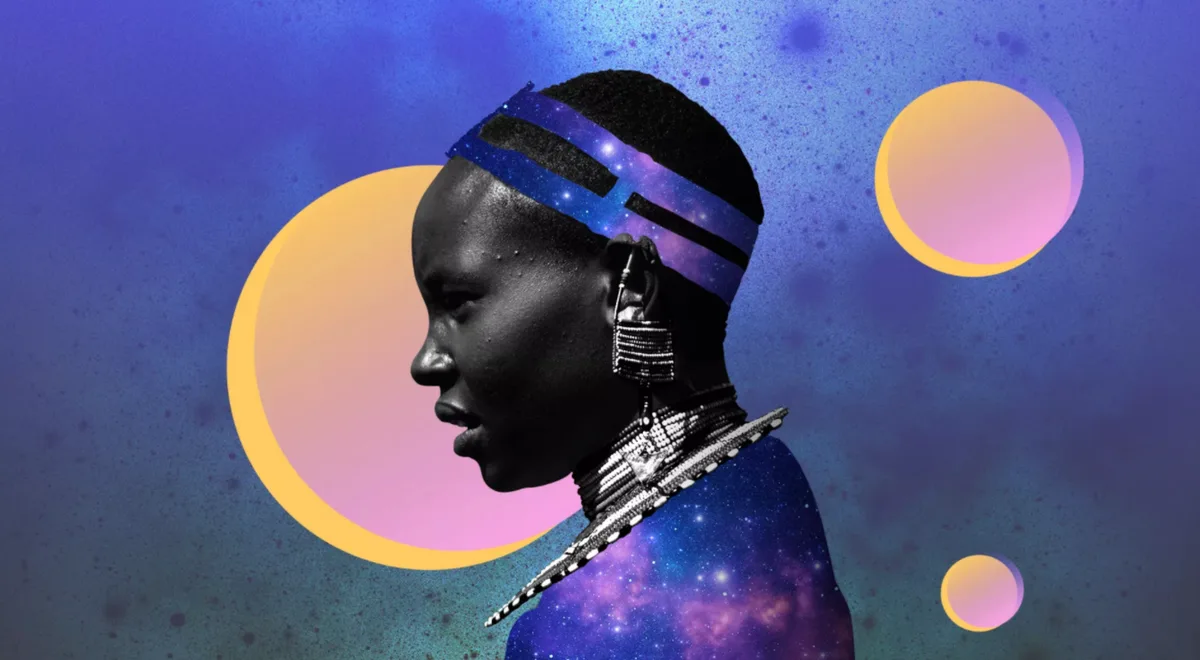
Cover image: illustration by Aïda Amer, with a photo by Gérard Sioen.
Antoinette Torres Soler

Sobre Antoinette
Antoinette Torres Soler is the Founder and Director of Afroféminas, a Spanish-language Afrofeminist magazine. With a degree in Philosophy and a Master’s in Communication, Antoinette is in the process of joining a doctoral program at the Universitat de Barcelona, researching artificial intelligence, cognitive autonomy and epistemic exclusion in racialized communities. Creator of AfroféminasGPT, the Socratic GPT of Afroféminas, the GPT against hate crimes and Habla con Afroféminas.
Tags:afrofuturism