artExplore also: sovereignty
Cartographies of the Detour
What does it mean to imagine from the margins? *Cartographies of the Detour* is a series of brief yet meaningful interviews that seek to balance critical depth with humanity, always from a perspective rooted in the Global South and for the Global South. While many imagine the future by looking forward, Peruvian artist Chonon Bensho does so by looking back. In her work, dreams, ancestral designs—
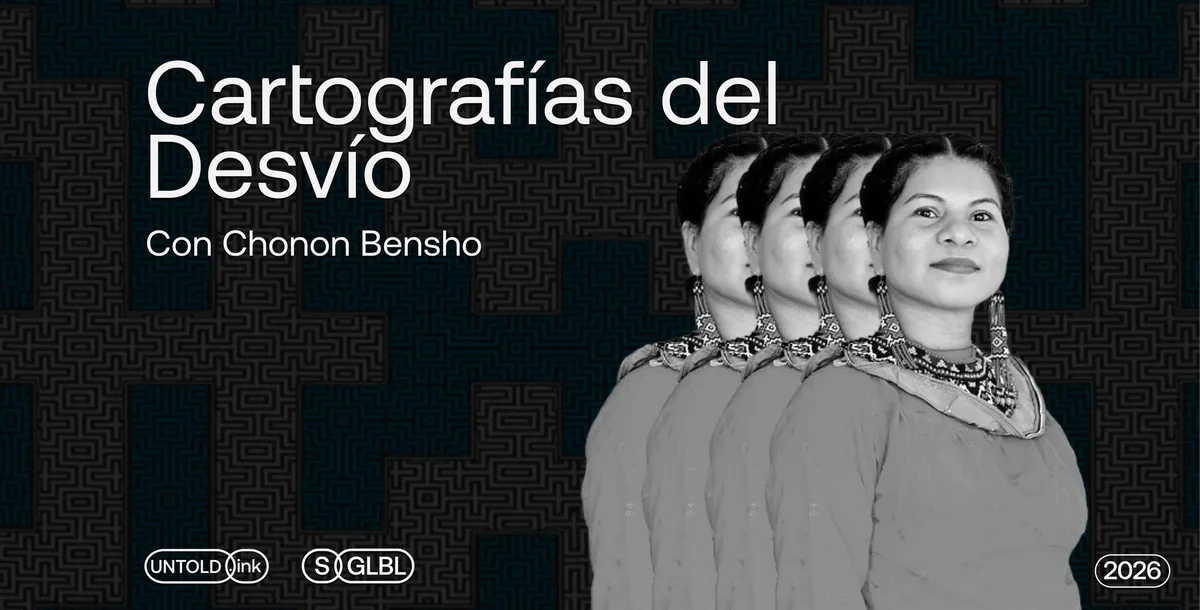
What does it mean to imagine from the margins? *Cartographies of the Detour* is a series of brief but meaningful interviews that seek to balance critical depth with humanity, always from a perspective rooted in the Global South and for the Global South.
While many imagine the future by looking ahead, Peruvian artist Chonon Bensho does so by looking back. In her work, dreams, ancestral designs, the forest, and the teachings of her grandparents do not belong to the past: they are tools for envisioning the future.
Far from pitting tradition against technology, this conversation aims to understand them as parts of the same fabric. Within this fabric, memory, education, nature, and artistic creation intertwine to remind us that no future can be built without caring for what sustains us.
What stories, people, or places have shaped your view of the future?
My work stems from my admiration for my ancestors and what they have to pass on to me. I wanted to understand how they lived, how they worked, and how they managed to coexist with their families and the world they happened to inhabit. Everything is constantly changing, but we must always find a way to adapt without losing sight of who we are.
Although I grew up speaking Shipibo, I felt that I still knew very little. When I finished my degree, I realized that, compared to my uncles and aunts, I was still very ignorant. I wanted to learn how they worked, how they understood the world, and how they spoke to one another. That’s when my work really began.
My grandmother was from the Lower Ucayali; other women in my family were from the Upper and Middle Ucayali. Each one created the same designs in different ways. Some made pottery, others wove kushmas; each had her own way of naming the designs. The same design could have different names depending on the community, but it remained the same. Understanding those differences—and, at the same time, that unity—was very important to me.
I’m still learning today. All that knowledge makes me realize that, even in a world full of challenges, we still have many beautiful things to preserve and pass on. My greatest interest is in bringing that legacy into the present and the future—finding ways to incorporate it into education and our way of life.
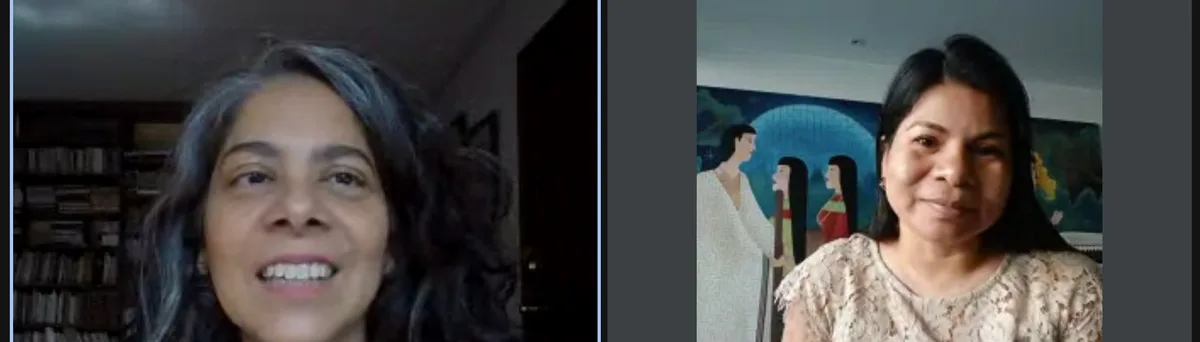
How do you view the role of technology in your community?
Technology is already here, and we can't act as if it doesn't exist. The problem isn't the technology itself, but how we learn to use it.
When the government distributed laptops and tablets to the communities, many teachers didn’t know how to use them, and the children ended up using them in ways no one had anticipated. That’s when I realized that the real challenge lies in education. We need teachers who are prepared to guide the children and teach them how to make the most of these tools.
Technology can help us a great deal. We can learn from people who are far away, communicate better, and enhance our education. It can also help revitalize our language. Our culture is deeply visual. If we make a video showing a plant and an elder explaining its uses in Shipibo, children will understand it much better than if they were just reading a written text. Learning happens through seeing, listening, and dialogue.
That is why I believe we should not separate technology and culture. Technology can also help us strengthen our identity and pass on our knowledge to future generations.
Are you looking to make a difference through your work?
To me, art is freedom. It's being able to create without anyone telling me what to do.
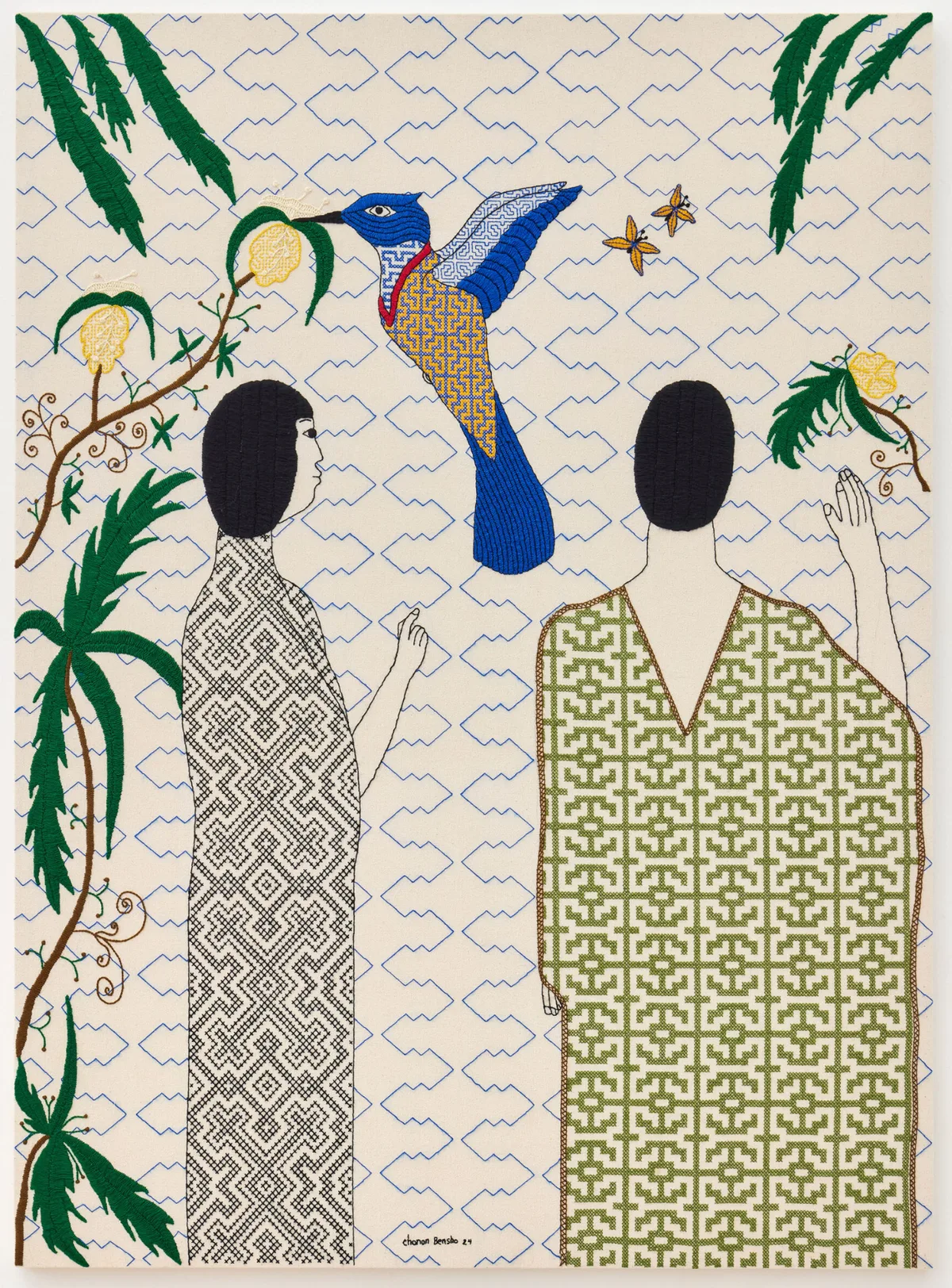
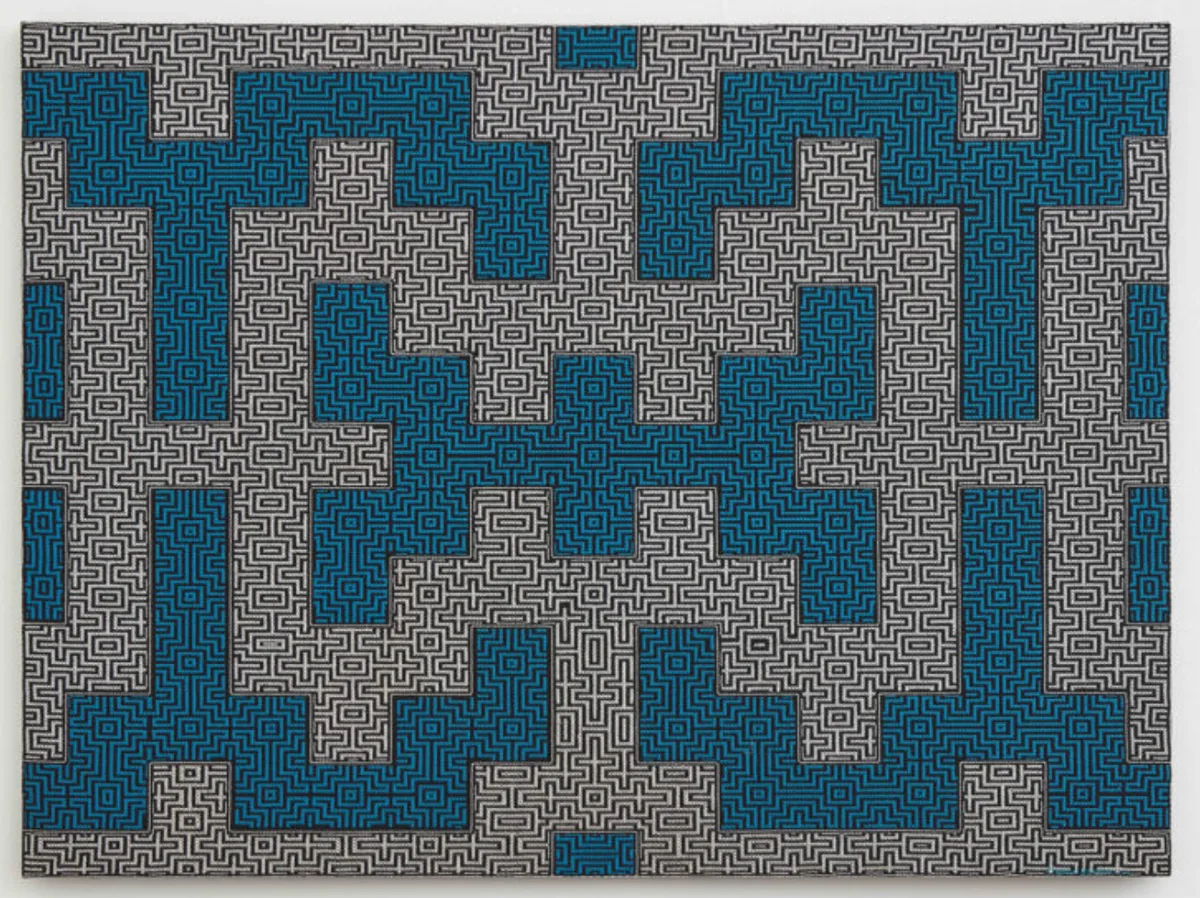
My work draws inspiration from ancestral designs, but those designs speak to many things: balance, the environment, music, dialogue, and the relationship between all beings. Everything is connected.
One of the things that worries me the most is that many people talk about “the Shipibo” as if we all thought the same way. There’s no single way of thinking. I don’t think the same way as other artists, nor as those who live in cities or work in indigenous organizations. I grew up in a community and try to spend part of the year on ancestral land; my experience is different, and so is my work.
For me, the environment isn’t just a trendy topic. It’s the way I live. My family and I take care of a botanical garden that my grandfather started and my mother continued. We take the children there so they can get to know the plants and learn from the older generation what each one means and what it’s used for. Maintaining that space requires a lot of work, but we do it because it comes from the heart.
At first, I thought my work spoke mainly to the Shipibo people. Over time, I came to realize that it could also speak to people from other cultures. When someone looks at one of my paintings and is reminded of their own grandparents or feels a renewed connection to their history, I feel that the work has already served its purpose.
My dreams are also part of my work. I often dream about my grandparents, and I try to incorporate their teachings into my embroidery and painting. It will never be exactly what they told me, but it’s my way of keeping that conversation alive.
What do you think is humanity's biggest misunderstanding?
I think we've lost touch with our roots. In Peru, we all come from indigenous peoples in one way or another, but we've gradually become disconnected from our cultures and, with that, from our humility as well.
Instead of drawing on the best of what we’ve inherited from our elders, we often end up repeating the worst. I see a lot of contempt among ourselves, a lot of resentment, and very little willingness to listen to one another. If someone thinks differently, attacks or criticism follow immediately, but there’s almost never an explanation of why we disagree.
I might have one idea, and someone else might have a different one. We can talk, listen to each other, and, if we don't agree, go our separate ways. The important thing is that there is a dialogue. What worries me is that we argue more and more and listen to each other less and less.
I think this has a lot to do with education. We’ve learned to react before we understand. If we could reconnect with our roots and regain that capacity for dialogue, we could build a much healthier society.
What conversations are still missing in decision-making forums?
Sometimes we think that change depends solely on those in power, but I believe it also depends on our ability to act collectively. In my community, when one person takes on a responsibility, the idea is that the rest of us support that effort. If a project benefits everyone, it shouldn’t be abandoned simply because the leadership has changed.
However, I see that the opposite is happening. Often, people want to start over so that everything bears their name. In the end, no one continues the previous work, and the community as a whole ends up being the real loser.
Something similar happens at the national level. I’ve never felt that governments have truly understood life in indigenous communities. They reach out during election campaigns, make lots of promises, and then disappear.
There are very serious problems that are hardly ever discussed: violence against women and children, rapes committed even by teachers, the lack of protection for victims, illegal mining, drug trafficking, and the absence of the state in the most remote communities. These are situations I see firsthand, and they outrage me deeply.
Sometimes people think that art is separate from these issues, but for me, that's not the case. All of this is also part of my work, because it's the reality we live in.
How do you envision real progress?
Of course we want progress. But healthy progress.
People often think that progress means building more roads, using more concrete, or extracting more resources. I don’t see it that way. We can advance technologically while also respecting the forest, water, trees, and all the living beings with whom we share this world.
We are not separate from nature. We live thanks to water, air, rivers, and trees. My mother and my grandmother used to say that trees also protect us. When they disappear, a part of our own lives disappears with them.
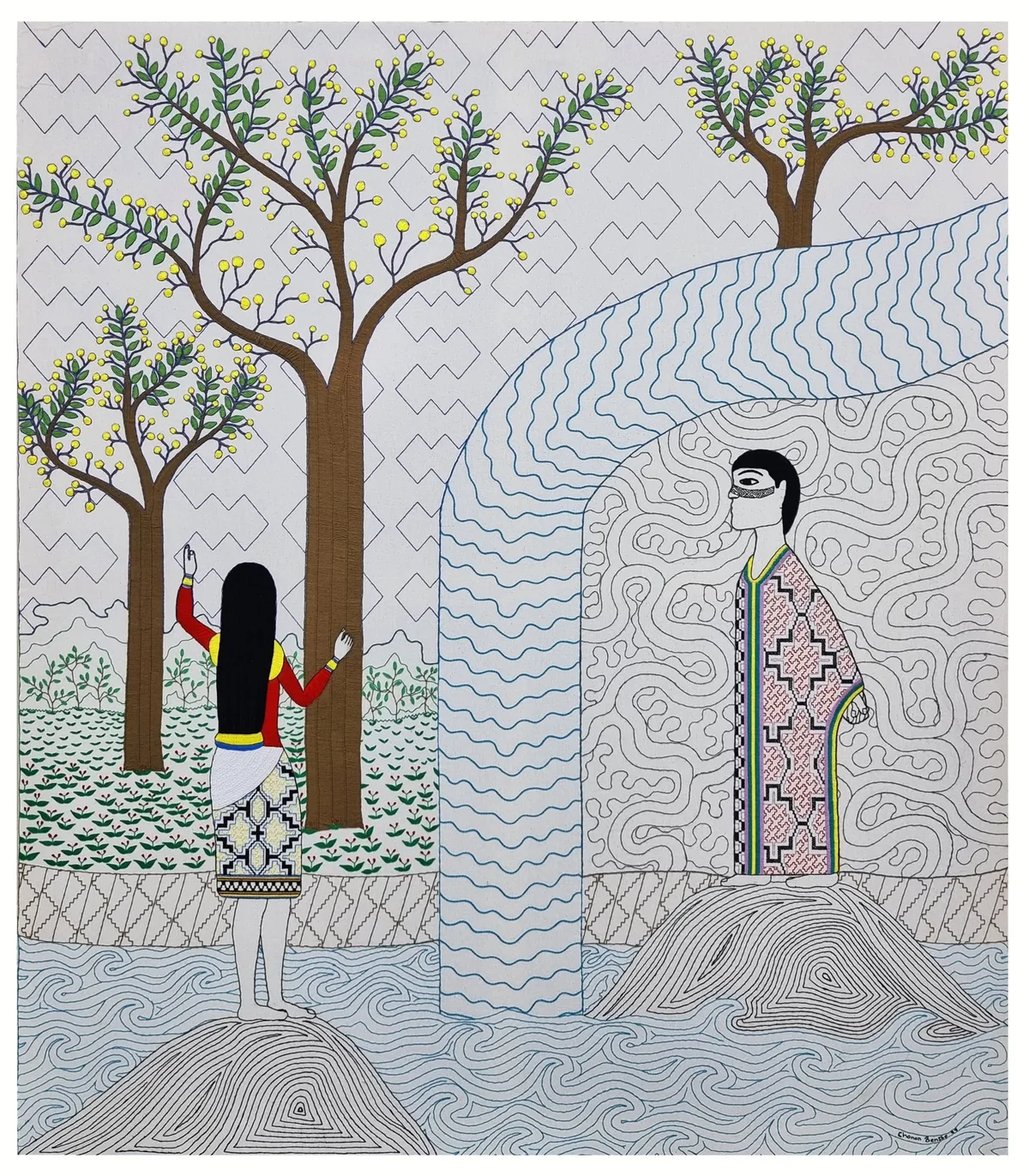
When I paint trees or talk about water, I’m not just talking about the landscape. I’m talking about memory, balance, and respect. I think true progress should teach us exactly that: how to live better without destroying what makes our existence possible.
Our generation can still choose a different path. We can have technology, cities, and development, but without losing our connection to nature or to our own spirit.
What risks are you willing to take as an artist?
I think you always have to take risks. If you don't speak your mind, what's the point of being in this world?
I've received both positive and negative feedback. I listen to it all, because it makes me think, too. But I don't live my life based on other people's opinions. I respect that everyone thinks differently; I also know how I want to live my life.
The most important thing for me is to feel free. I make a living from my work, and I feel at peace with the decisions I make. When I’m painting, I enter a different world—a space where I can think freely. Then I return to the everyday world, with all its conflicts and difficulties, but that inner place is always still there. I think that freedom is what I try hardest to preserve in my work and in my life.
What works or artists have given you a new perspective?
At first, I thought that to create art, I had to look only to my own culture. Then I realized that learning about other experiences doesn't mean losing one's identity, but rather broadening one's perspective.
When I first saw Frida Kahlo’s artwork, I was struck by the way she spoke about herself and her story. I was also interested in learning about Japanese art, especially sashiko embroidery. It made me realize that, even though we live far apart, many cultures have developed similar ways of relating to textiles, nature, and memory.
I also learned a lot by studying artists like Kandinsky and Picasso. Not to imitate them, but to understand how each of them developed their own artistic language. That helped me reaffirm that I, too, had to develop my own based on my own experience.
Learning about other cultures didn't distance me from my own; on the contrary, it allowed me to appreciate even more what I had received from my grandparents and to understand that all cultures have something to teach us if we approach them with respect.
An idea you're leaving behind
When someone tells me that a painting reminded them of their grandfather, their mother, or a place that was important to them during their childhood, I realize that memory doesn’t belong to just one culture. We all need to feel connected to those who came before us.
That's why I no longer think my work belongs to just one town. I hope it can speak to anyone who is seeking to better understand their own history.
What keeps you going? When everything is shaking?
My family. My husband has always been there for me and has believed in my work, even when things have been tough. Also, my children and the people who are with me every day.
There are difficult moments in the art world, too. I’ve worked with people who promised a lot but then didn’t follow through. Those experiences are painful, but they’re also instructive. I learned that you have to trust your own work and not rely entirely on what others promise.
When difficulties arise, I return to painting. That’s where I find peace once again. Painting allows me to organize my thoughts, remember my grandparents, and feel that I’m still walking alongside them.
I think that's what keeps me going the most: knowing that the work I do stems from a story much bigger than myself and that, as long as I can keep creating, that story will also remain alive.
If you could plant an idea in the minds of those who envision the future from other parts of the world, what would it be?
Let’s not be afraid to learn from one another. Every people has valuable knowledge. No culture has all the answers, and no culture should feel superior to others. We can make great strides if we learn to engage in dialogue, to listen, and to respect different ways of understanding the world.
I don't believe there is a single way to live or a single way to build the future. The important thing is not to lose our humanity along the way.
I hope we can once again see nature as a part of ourselves and not just as a resource. I hope we can better educate our children and teach them to value both technology and the wisdom of their elders.
If we can maintain that balance, I believe we still have a very bright future ahead of us.
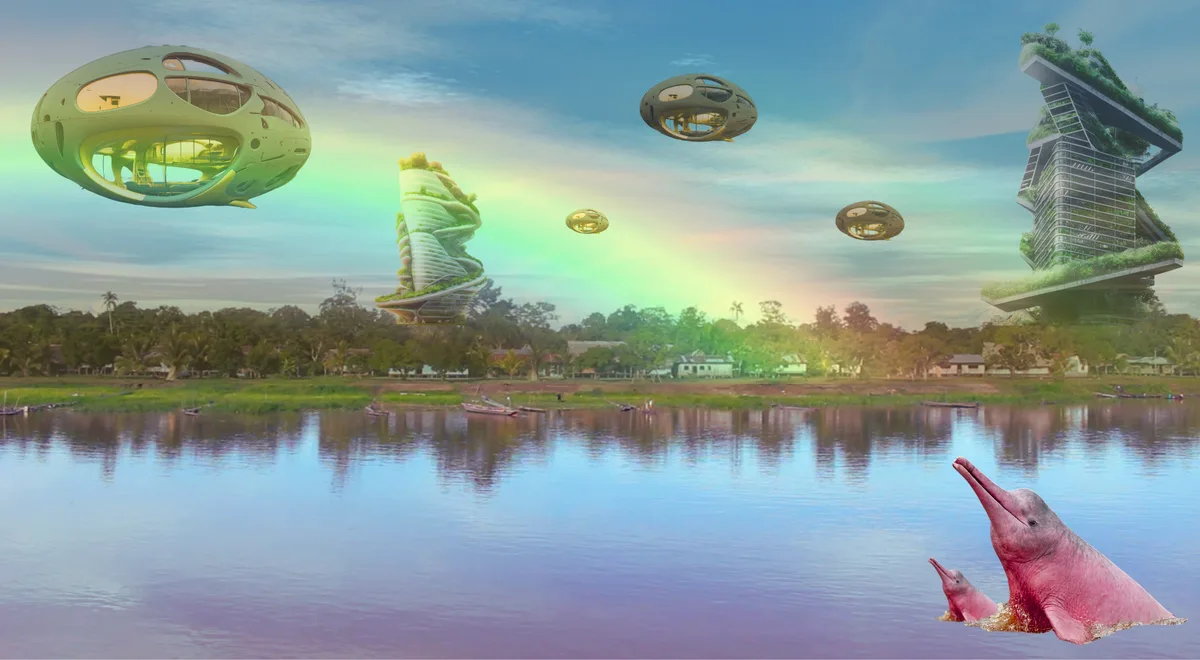
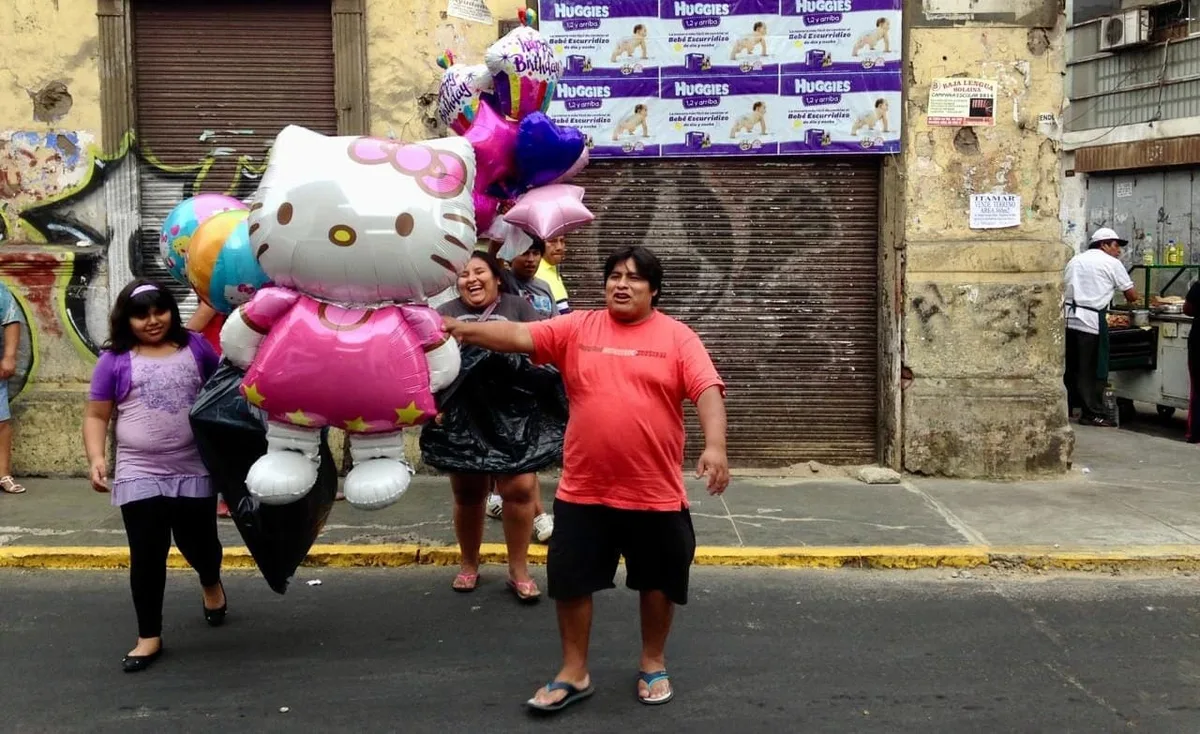
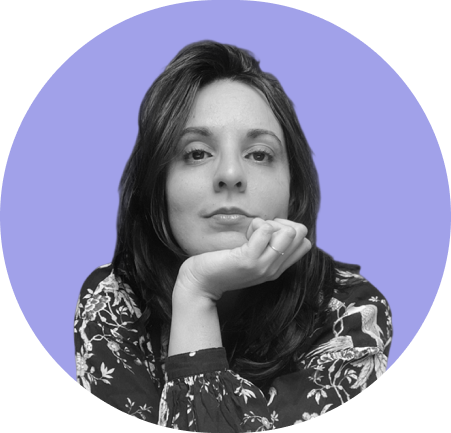
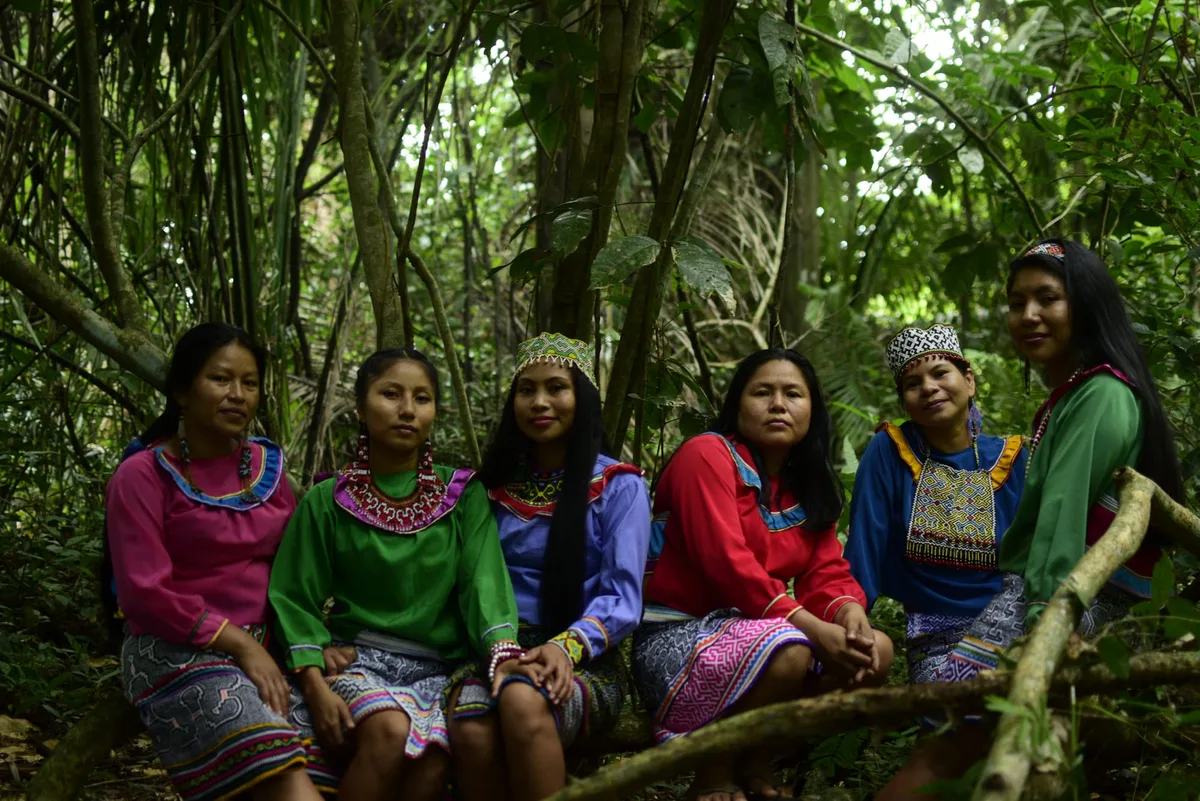
Images: Art by Chonon Bensho, portrait of Chonon Bensho by Adrián Portugal.
Chonon Bensho

Sobre Chonon
Chonon Bensho (Pucallpa, 1992) is a Shipibo-Konibo multimedia artist and poet who revitalizes the Kené, an ancestral tradition of abstract patterns inspired by visions from entheogenic plants such as ayahuasca, which possess healing powers and are traditionally passed down from mother to daughter. Trained in both Indigenous cosmology and fine arts (she graduated in 2018), Bensho creates large embroidered canvases that express the harmonious coexistence between humans and the Amazonian environment, depicting mythological beings, animals, and plants as a metaphor for the inseparability of all living beings. In 2022, she became the first Indigenous woman to win the Banco de Reserva del Perú Painting Prize, and her work has been exhibited at the Alliance Française in Lima and in Basel, Switzerland, in addition to being part of the collections of the MASP and the MALI.
Tags:culture